Dave
Most of the problems I'm asked to help with look like structure or process problems. Usually they're relationship problems: a leadership team that agrees in the room and drifts apart outside it, or a partnership where every organisation is doing its best and the system still lets people down.
I'm Dr Dave Yates, an organisational anthropologist (PhD, Systems Change) and systemic team coach. For over a decade I've worked with senior leaders across the Department for Transport, Network Rail, Arriva Rail London, local authorities, NHS trusts and national charities, helping them see what's really going on and change it together.
That work translates directly to the private sector. Joint ventures, client–contractor alliances, acquisitions and fast-growing firms all depend on people from different cultures making decisions together, and that is where I help.
What clients bring me
- A leadership team that isn't pulling together: slow decisions, silos, polite agreement and quiet resistance.
- A partnership or system that doesn't connect: organisations that need each other but don't trust each other yet.
- A change that isn't landing: a new structure or strategy where the culture hasn't followed.
- A merger, acquisition or alliance: two or more organisations, each with its own way of doing things, that now need to act as one.
- A new leader or new organisation: the chance to set up how people work together from the start.
How I work
I don't bring off-the-shelf solutions. I start by observing how your organisation actually works: its meetings, stories, unwritten rules and relationships. Then I use dialogue to help your people see it for themselves and decide what to do differently. Change that people make together is change that sticks.
See some of the results, or get in touch to talk about what's stuck.
What is organisational anthropology?
People often ask what an organisational anthropologist actually does. The short answer is that I help leaders and teams understand how their organisation really works – the stories, habits and relationships that shape what people do – so they can change it with their eyes open rather than by guesswork.
Anthropology is the study of how people live together and make sense of their world. Organisational anthropology brings the same curiosity to work. It treats an organisation less as a machine to be engineered than as a community in which people are constantly making meaning together, through the stories they tell, the rituals they repeat and the relationships of power that decide whose version of events counts.
Most of what drives behaviour never appears in the strategy or the organisation chart. It lives in the informal account of 'how things are done here'. That is why culture is better understood as something an organisation is and does, every day, than something it simply has, and why it rarely responds to a launch event or a list of values.
What I pay attention to
- Narrative and myth: the stories about why a process exists, why another team can't be trusted, or why something was tried once and failed. Some are accurate, many are partial, and a few have hardened into myth: no longer tested, but still shaping decisions.
- Ritual: meetings, away days, approvals and onboarding, where a group performs what it is. Who speaks, who waits to be invited, and which ideas get quietly translated into safer language can tell you more than any survey.
- Power: culture is never simply shared; it is negotiated, and some people are better placed than others to make their meaning stick.
What it looks like in practice
I usually begin by listening to people one at a time and accepting the account each of them gives. Nothing is attributed to anyone, but I bring themes back to the group, and it is often in those themes, the phrases that recur and the same incident told from four different chairs, that a team first sees itself clearly. From there, the work is helping people hear each other's stories properly, and moving a team, gradually, from "they are the problem" to "we are part of how this keeps happening".
It is especially useful when a change is technically sound but isn't landing, when a talented leadership team isn't working as a team, or when organisations that need each other keep falling back into old patterns.
See how this shapes my approach, or get in touch.
Results
Department for Transport and the rail industry
Challenge: leaders across DfT, Network Rail and the wider rail industry needed to work as one system ahead of rail reform.
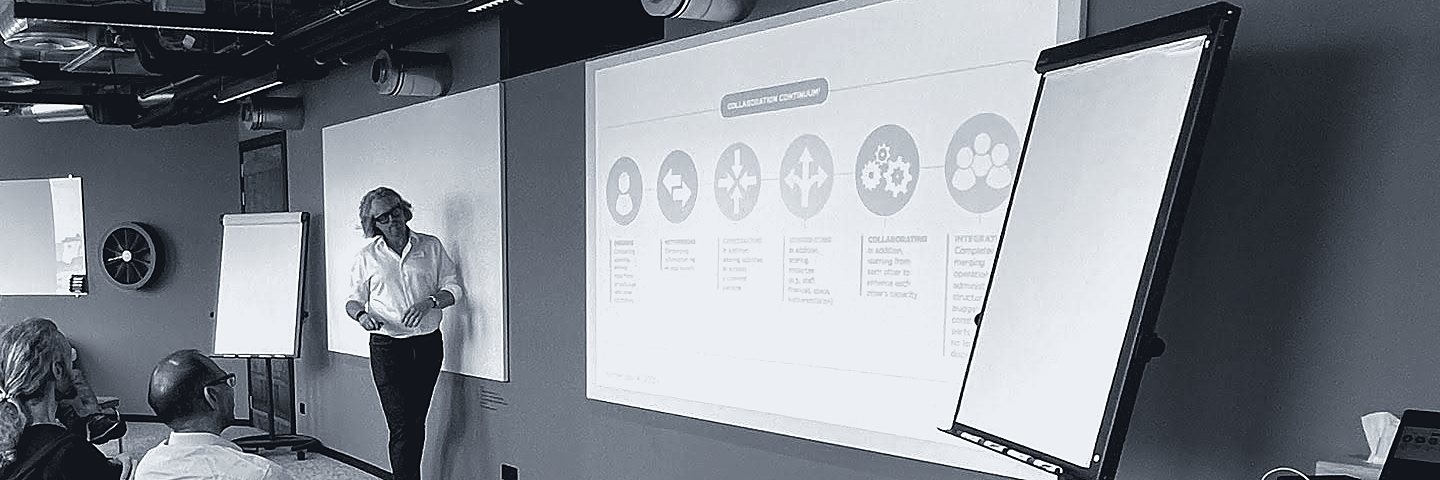
What I did: helped design and deliver the Connected Leaders Programme for senior rail leaders; coached Director General and director teams within the civil service; and consulted on culture change spanning DfT, Network Rail, Rail Delivery Group and the Great British Railways Transition Team.
"Dr Dave worked with us for around a year. He was instrumental in aligning the organisation towards a significant piece of change. He approaches leadership and team development with organisational strategy for real impact."
Director, Central Government
Network Rail, Wales & Western Region
Challenge: regional executive teams needed to shift culture and work across organisational boundaries.
What I did: systemic team coaching with executive teams, systems-thinking workshops on railway improvement, and support to develop inclusive leadership practice.
South Tees Systems Leadership Programme
Challenge: people facing multiple disadvantage move between many services, and the services weren't joined up around them.
What I did: co-designed and facilitated an eight-session programme bringing together leaders from 16 organisations, including Middlesbrough and Redcar & Cleveland councils, the NHS and local voluntary sector services. We built trust first, mapped the system through real case studies, assessed system maturity on prevention, and agreed a shared prevention priority to work on together.
Arriva Rail London
Challenge: a private-sector train operator needed a shared, practical description of the behaviours it expected from its people.
What I did: worked with the HR Director to develop the organisation's behaviour framework.
Royal National Orthopaedic Hospital, sarcoma service
Challenge: communication gaps, referral pressure and inconsistent follow-up across a specialist cancer pathway.
What I did: in a Macmillan-funded project, facilitated staff from across the pathway to analyse the issues and co-design practical actions on referral triage, follow-up plans and standardised patient communication.
The Scouts and Girlguiding
Challenge: two national volunteer-led youth charities, with almost a million members combined, exploring how to collaborate.
What I did: worked with both executive teams on the barriers to and enablers of collaboration, used anthropological approaches to understand volunteer cultures, led digital project governance across both movements, and helped secure £2 million in external funding.
Executive education
I designed and teach on the Advanced Certificate in Organisation Development at Singapore Management University, for mid-career professionals.
Services

Leadership team coaching
For executive and senior teams that need to make faster, better decisions together. Usually runs over several months and combines:
- an upfront diagnosis of how the team really works
- observing your real meetings, with candid feedback
- focused team sessions on your live strategic challenges
- confidential one-to-one coaching for team members
Culture diagnosis
Using ethnographic observation, I find the unwritten rules, stories and patterns that shape behaviour, so you can see why change isn't landing and where the real leverage is. Useful before a restructure, after a merger, or when a review has flagged culture.
Partnership and systems leadership
For partnerships, alliances and local systems that need many organisations to act as one. I bring the right people into the room, build trust, map the system together and agree shared priorities. Examples include client–contractor alliances on infrastructure programmes, joint ventures, multi-agency partnerships, and health and care systems.
Integration after mergers and acquisitions
Deals are agreed on spreadsheets; integration happens in conversations. I help leadership teams understand the cultures they are bringing together, agree how decisions will be made, and build one way of working that keeps the best of each.
Leadership programmes and facilitation
Bespoke workshops, away days and development programmes that build systems thinking and collaborative, inclusive leadership.
Who I work with
- Private sector: infrastructure contractors and engineering firms, rail operators, regulated utilities and professional services businesses.
- Public sector: central government, local authorities and the NHS.
- Charities: national federations and local voluntary organisations.
My approach draws on the dialogic tradition in organisation development: change happens when you change the conversations that shape everyday thinking and behaviour, by involving more and different voices and changing how people talk to each other.
Approach

I'm an organisational anthropologist. I explore organisations much as an anthropologist would explore a community, except my fieldwork happens in boardrooms, project teams, frontline operations and every space in between.
What does that look like? I ask lots of annoying questions in meetings…
I look at organisations as living systems: networks of people, relationships, rituals and unspoken rules. Using ethnographic observation, I pay close attention to what's said and unsaid, the stories people tell, the symbols they value and the patterns that repeat over time.
Systems thinking keeps me focused on what emerges when people come together, and how that ripples through an organisation, sometimes in surprising ways. It's about the formal structures and also the human dynamics: trust and tension, cooperation and conflict, and the way power moves through the system.
My work is part detective story, part mapping, part coaching. I help leaders and teams notice the forces shaping their reality and make sense of them together. When people see themselves, their roles and their relationships more clearly, they can choose differently, collaborate more deeply and create change that actually sticks.
Contact
Tell me a little about what's stuck. I'll reply personally, usually within two working days, and the first conversation is free.